PCB rear lamp fiat spider
This week I'm trying to make sure everything I need to pass inspection is working, which means I need to go through all the lighting and make sure all the signals work. I've learned quite a bit.

The first thing I did with the car was to pull out the PCB boards from the rear lighting fixtures. After doing this I could see that all the sockets had oxidized and was probably the reason why a lot of the lights weren't working. While the wife and I watched our show on Netflix, I scrubbed away at all the sockets and lubricated everything with a light coat of dielectric grease (this should prevent further corrosion or oxidization). I also took this time to test every bulb with my multimeter. 

I set the multimeter to beep and detected every complete circuit on the bulb. This saved me $1+ per bulb. They all were good! I had planned on replacing them all. After I replaced every bulb I also tested each circuit with the multimeter to make sure current could make it through to the bulb.

After installing my panels, just about everything worked. I noticed that the side markers didn't blink. After posting on the www.fiatspider.com forums I learned that the side markers don't blink on this car and was directed to a website that described how to remedy this situation. It's not required by U.S. law, but I think it would be a great safety feature. So, sometime down the road I will modify the cars signals to blink in unison or alternating.  
 
 
Last week I installed my horn button in the center of the steering wheel. It wasn't pushing in all the way and I didn't like the seat. I forgot I placed it in there and hooked the battery up a day or two later. HOOOOOOOOOOOOOOOOOOOOOOOOOOOOOOOOONK. LOL. Surprised me and everyone else in the house. I quickly unhooked the horn. I haven't touched it since.

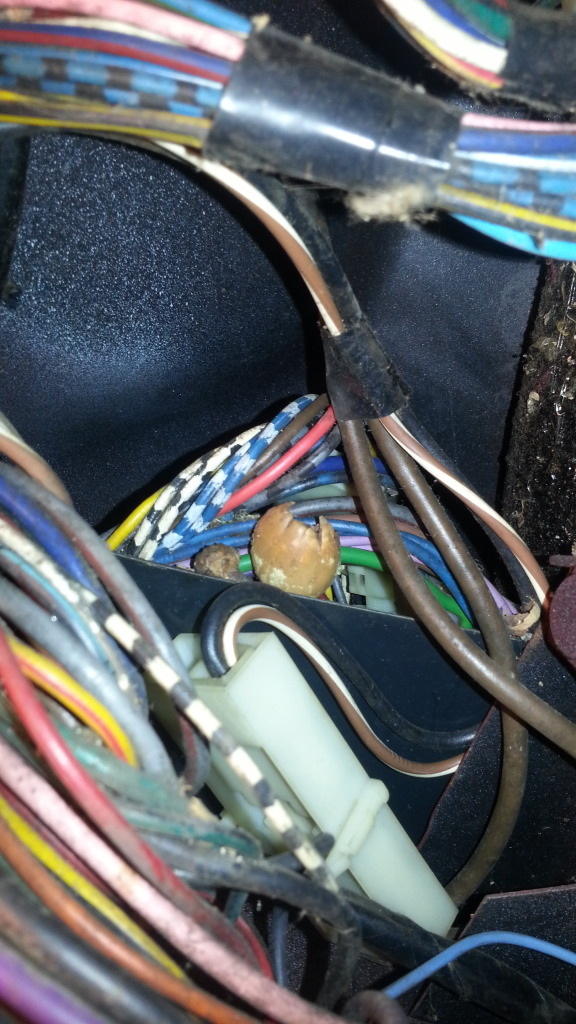
Today I headed out to the garage and installed the rear lights. Some aren't working and will require new bulbs. I also found out that if the hazard switch is not installed, none of the blinkers will work. While I was out there I also decided to take a look at the horn again. On the bottom of the horn button there is a tab that accepts a connector. My tab was bent enough that the connector grounded itself on the steering nut. I bent the tab back up and put everything back in. The horn seated nicely and now it honks when it is supposed to. Hope this helps anyone trouble shooting the same issue.
 
 
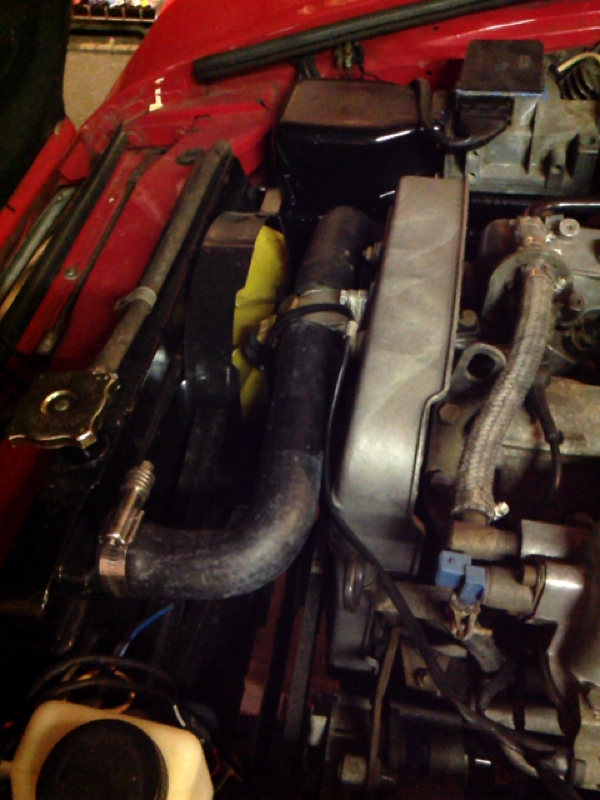
Today I'm going to solve some problems with my cooling system. I THINK my thermostat was opening but I'm not sure. To be sure I'm going to test it in boiling water today. I'm also going to drill the RECOMMENDED hole in the thermostat to allow air bubbles to escape through the system so it may run more efficiently. When I am through checking everything I will update this post below.

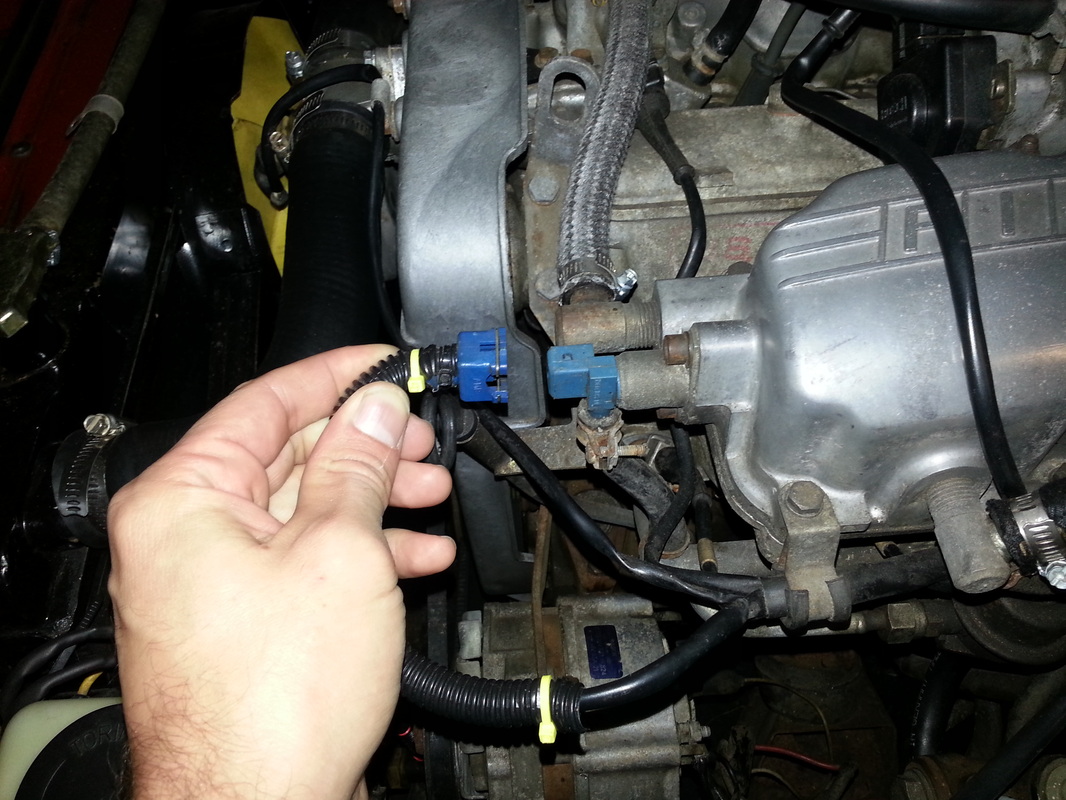
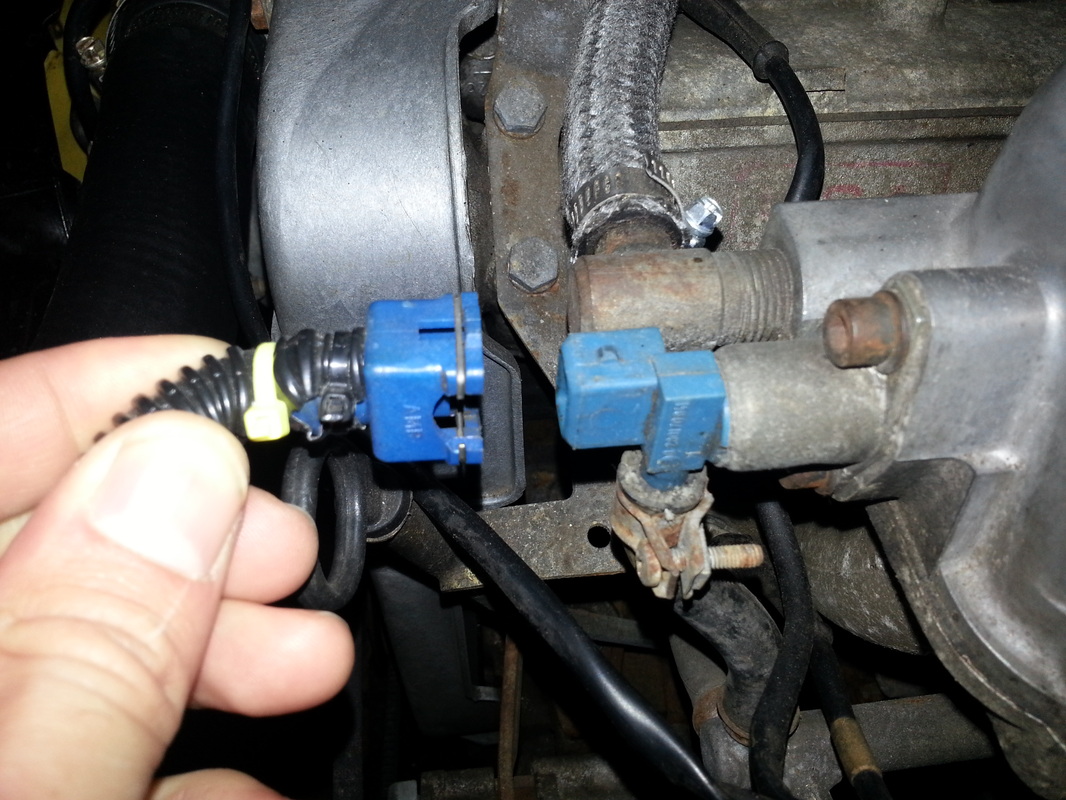
UPDATE: The thermostat opened in boiling water! Don't need a new one! Now I'll make sure it is installed properly. I tested the fan. The way you test the fan is by running a ground to the fan. Keep the blue wire hooked up. Worked great! 

The last two things that could be a problem are the heat sensor switch in the bottom of the radiator or air in the system. You can check the sensor by putting it in water, boiling it and testing continuity. It should complete a circuit when it is hot. I did not do that. I tested everything else and started the car. I also check continuity to all the wiring attached to the fan system. Everything is now working. I cleaned every contact on every connection and everything worked flawlessly. The heat hovers around 190 and stays there. I've decided that I am going to install a radiator fan over ride switch in case I'm out on the road some day and one of the grounds shorts out.

EDIT/UPDATE: Here is a blog post from another site explaining where to drill the hole. Or at least showing you a picture.
 
 
Today I was able to pick up some one inch foam to make to make a new shifter gasket with. I recently purchased a new inner shifter boot and a new foam gasket didn't seem to be available. The old foam gasket was tattered and torn. Mice had their way with it and some lubricant splashed  out of the transmission and onto the foam. I believe that had to do with the ripped inner boot seal. With the inner boot being replaced, everything should install nice, neat and clean and stay that way.

I used the old foam gasket as a template and cut out the shape from my new foam. When I was finished with that I used a punch set to get perfect holes for my screws to go through. My cutting wasn't perfect, but it won't be seen and it will seal up the gap quite well, regardless. I think an electric carving knife would have been best for a clean cut, but I did not have one on hand.
 
 
I'll have to buy a new heater core or bypass the current one. I'm looking at a core at Autoricambi: see here. Will need to research and see if I have to buy other parts for installation.

Today I received my inner shift boot for the shifter. I'm looking forward to finishing up the shifter area. Once that is done and the heater core situation is taken care of, I can begin piecing my interior together.
 
 
Today was an interesting day. I feel like the theme song from Doogie Houser M.D. should be playing while you read this post.

I learned many things today. I learned that you should clean off the threads from the gas tank studs after you paint, that you should test your fuel pump before you put it in, the fuel pump doesn't run unless you're cranking or running, that if you have a gas tank that someone else sealed, not only should you pressure test it (which I did) but you should make sure the liquid can flow out of all the holes.

We had many issues with gas flow today. After back tracking through the fuel system we learned that the outlet of the gas tank was clogged. With what? We don't know. Will we find out again? Maybe. We jammed some wire down and broke it up. After reassembling all the fuel lines that I had to take apart for testing we were able to get the car to turn over and run for a few seconds. There was a problem.
After testing the injectors and various other possibilities, I finally decided that the injectors must be clogged. I loaded some Seafoam into the gas tank. I ran the car a few times and each time it ran a little longer. I let the car sit a bit and went again. I was able to keep it running using the throttle. A little while later after running the throttle the car started hold up on its own.I was very happy that my car was running, but soon found out that the heater core was leaking. Not a bad day over all. Now I just need to replace that heater core (or bypass it) and getting the car squared away so I can drive it soon.
 
 
While this isn't a Fiat Spider, this is a really great car. In this episode they go to Italy to buy a used Dino and fix it up. Watching them fix up the old car gives me ideas about fixing up my own vintage italian car. If you like car rebuild/fixer-upper shows, then check out the whole episode by clicking here!
 
 
Today I decided to install a filter in between the gas tank and fuel pump. The car is built with a fuel filter after the pump. But if there are bits and pieces of dirt or dust in my tank, they could be sucked straight into the pump. Doesn't make much sense to have a filter AFTER such an expensive piece of kit. I went to Napa and purchased a NAPA Gold 3299. This was advised by one of the forum members at www.fiatspider.com. I will be trying to start the car on Tuesday with some help. I have a few things to button up. I need to bolt down the gas tank, attach the fill hose to the gas tank and make sure all the wires are hooked up. I also need to take a battery out of one of my every day cars and use it to start the car. If everything goes well I'll be starting it on Tuesday. I may and try to take a video.
 
 
Picture
If you are a frequent reader, then you know I received two pieces of a Fiat in the mail a while back (check out the blog post "Chopped Parts Have Arrived"). These two pieces where the winged mounts that hold on the rocker panelsn (click the image on the left for a larger view). My car had lost both of its wings due to car cancer (RUST). Luckily the surrounding area was solid and just need to be cleaned up, media blasted and/or rust treated. 

I started out the job by drilling out the factory spot welds on my spare parts. This allowed me to use a cold chisel and some elbow great to pop off my much needed replacement part. After the wing (or ear) was removed I popped it in the blast cabinet and media blasted it. I wire brushed and ground out the area on the car that needed attention and used a flanger/punch to put holes in. I was all ready for some spot welding. After trimming up the piece and fitting it nicely I tacked it into place with a mig welder. In the images below you can see me dry fitting it with a clamp and then the final weld. I'm no welding expert. It's not pretty, but it's going to be covered with a rocker. The whole under side of the rocker will be sanded/wire brushed, cleaned up, and finally prepped with various rust proof paints and primers.


Picture
I'm starting to assemble the interior. I don't have the resources to replace/restore everything at the moment. Most of the interior components are easy to remove and replace. Right now I'd like to get it on the road, so this week I'll be spending a lot of time getting the interior together and preparing to weld two parts on the exterior.

Unfortunately I have a few work deadlines to take care of, so my updates will be slowing down for a bit. I really hop to get a lot of the car buttoned up this month.